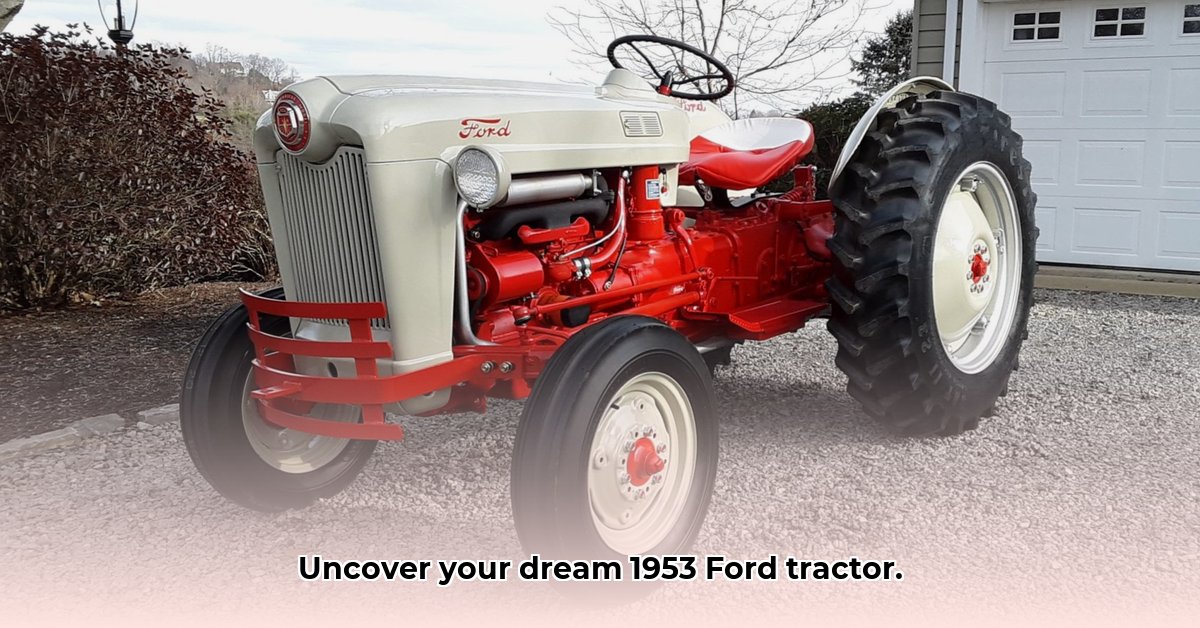
Ford Tractor 1953: A Collector's Deep Dive
The 1953 Ford NAA Golden Jubilee tractor isn't just farm equipment; it's a piece of American agricultural history and a highly sought-after collector's item. This guide explores everything you need to know about acquiring and preserving this iconic machine, from its technical specifications to its current market value and potential pitfalls. Prices vary significantly, so let's navigate this fascinating market together. For more information on Ford tractors from other years, check out this useful resource.
Technical Specifications and Features of the 1953 Ford NAA Golden Jubilee Tractor
This classic tractor boasts a powerful 124 cubic inch (2.03-liter), four-cylinder engine, generating approximately 28 horsepower – substantial for its era. Its three-speed transmission offered versatility for varied field conditions. Weighing around 3,000 pounds, it's a robust workhorse. However, the NAA Golden Jubilee isn't just about raw power; its stylish "Jubilee" paint and badging set it apart. Desirable original accessories, such as the Dearborn bumper and Cyclone air filter, significantly enhance its value, representing cutting-edge technology for the time.
The 1953 Ford NAA's Place in History
The post-World War II agricultural landscape demanded efficient and reliable machinery for modernization. The Ford NAA rose to the occasion, quickly becoming a farmer favorite. Its user-friendly design and impressive performance cemented Ford's leading role in agricultural equipment. The Golden Jubilee edition wasn't just another model year; it celebrated a significant milestone in Ford's history. Owning one is akin to possessing a piece of American farming history from a transformative period.
Understanding the 1953 Ford Tractor Market
The market for these tractors displays remarkable price variability, ranging from approximately $5,000 to an impressive $35,000. This wide range stems primarily from the tractor's condition. A meticulously restored, original tractor in pristine condition commands top dollar, while one showing significant wear will fetch a much lower price. Original accessories, particularly sought-after items like the Dearborn bumper or specific air cleaner designs, significantly impact value. Interestingly, a fully restored tractor doesn't always surpass a well-preserved original; some collectors prioritize originality above all else. Restoration quality is critical; a poorly executed restoration can diminish value.
Factors Influencing Price:
| Factor | Price Impact |
|---|---|
| Excellent Condition | +$15,000-$25,000 |
| Fair/Poor Condition | -$10,000-$20,000 |
| Original Accessories | +$2,000-$5,000 |
| Full Restoration | Variable; may decrease value for purists |
Buying Your 1953 Ford Tractor: A Practical Guide
Ready to begin your search? Here's a structured approach:
1. Thorough Inspection: Meticulously examine every aspect: engine, hydraulics, electrical system, and paint. Look for wear, damage, or prior repairs.
2. Documentation Review: Investigate the tractor's history. Service records, previous owner information, and photographs provide valuable insights into its past and can influence its value. Comprehensive documentation enhances desirability.
3. Test Drive (If Possible): Operate the tractor to assess functionality and identify potential mechanical issues. This hands-on experience is invaluable.
4. Ask Questions: Don't hesitate to inquire about anything unclear. Thorough questioning prevents future regrets.
5. Seek Expert Advice: A pre-purchase inspection from a mechanic specializing in classic tractors is a wise investment, potentially saving substantial funds on unexpected repairs.
Potential Issues and Mitigation Strategies
Even these iconic tractors can present challenges. Here's a brief overview:
| Potential Problem | Likelihood | Impact | Mitigation |
|---|---|---|---|
| Engine Problems | Moderate | High | Thorough pre-purchase inspection, compression test by a mechanic |
| Hydraulic Leaks | Moderate | High | Pressure tests, visual inspection of all lines |
| Electrical Issues | Low | Moderate | Careful examination of all wiring and components; professional evaluation if needed |
| Cosmetic Imperfections | Low | Low | Thorough photo review; realistic expectation regarding age and use |
How to Accurately Assess the Value of a 1953 Ford NAA Golden Jubilee Tractor
Key Takeaways:
- The value of a 1953 Ford Golden Jubilee or 1954 NAA tractor is highly variable, with condition being the primary determinant.
- A running tractor is significantly more valuable than a non-running one.
- Included implements increase its value.
- Originality holds considerable importance for collectors, while functionality is prioritized by farmers.
- Parts scarcity can significantly impact restoration costs and overall value.
Understanding the Market
The price range for these tractors is substantial, influenced by numerous factors. A fully restored, show-quality tractor will command a top price, while a project tractor will sell for considerably less. Consider it similar to the difference between a pristine classic car and a barn find—both are the same model but with drastically different values.
Mechanical Considerations
The NAA/Jubilee's robust design incorporates key features such as its powerful engine, Sherman auxiliary transmission, and live hydraulics. These elements impact the tractor's value. The Sherman transmission, for example, influences PTO speed and suitability for various tasks. The type of hydraulic pump (piston or vane) also affects value, with piston pumps generally being more desirable.
The Golden Jubilee: A Collector’s Item?
The distinction between a 1953 Golden Jubilee and a 1954 NAA, while mechanically similar, is significant to some collectors. The hood emblem differentiates them, impacting pricing for dedicated enthusiasts. This is akin to the difference between a standard model and a limited edition.
Condition: The Paramount Factor
The tractor's condition is the biggest value determinant. A meticulously maintained tractor with original paint and accessories commands a premium price compared to one needing substantial restoration. Thorough evaluation for rust, tire wear (new tires are expensive!), and overall mechanical soundness is critical.
Pricing Assessment: A Step-by-Step Guide
- Research: Study online listings and auction results to understand market trends.
- Inspection: Inspect the tractor carefully for mechanical issues, rust, and missing parts.
- Test Drive (if possible): Assess the tractor’s operation, noting any unusual sounds or performance problems.
- Assess Originality: Determine the tractor's originality, as original parts increase value.
- Compare: Compare the tractor against similar models listed for sale.
Included Implements: Enhanced Value
Original implements, such as a plow, cultivator, or box blade, significantly increase value adding to both functionality and collector appeal.
Risk Assessment
Potential problems, such as a worn vane pump, may necessitate expensive repairs. Furthermore, parts scarcity is a concern. A thorough pre-purchase inspection by a knowledgeable expert is crucial to mitigate potential risks.